
SMARTER SWATCHES

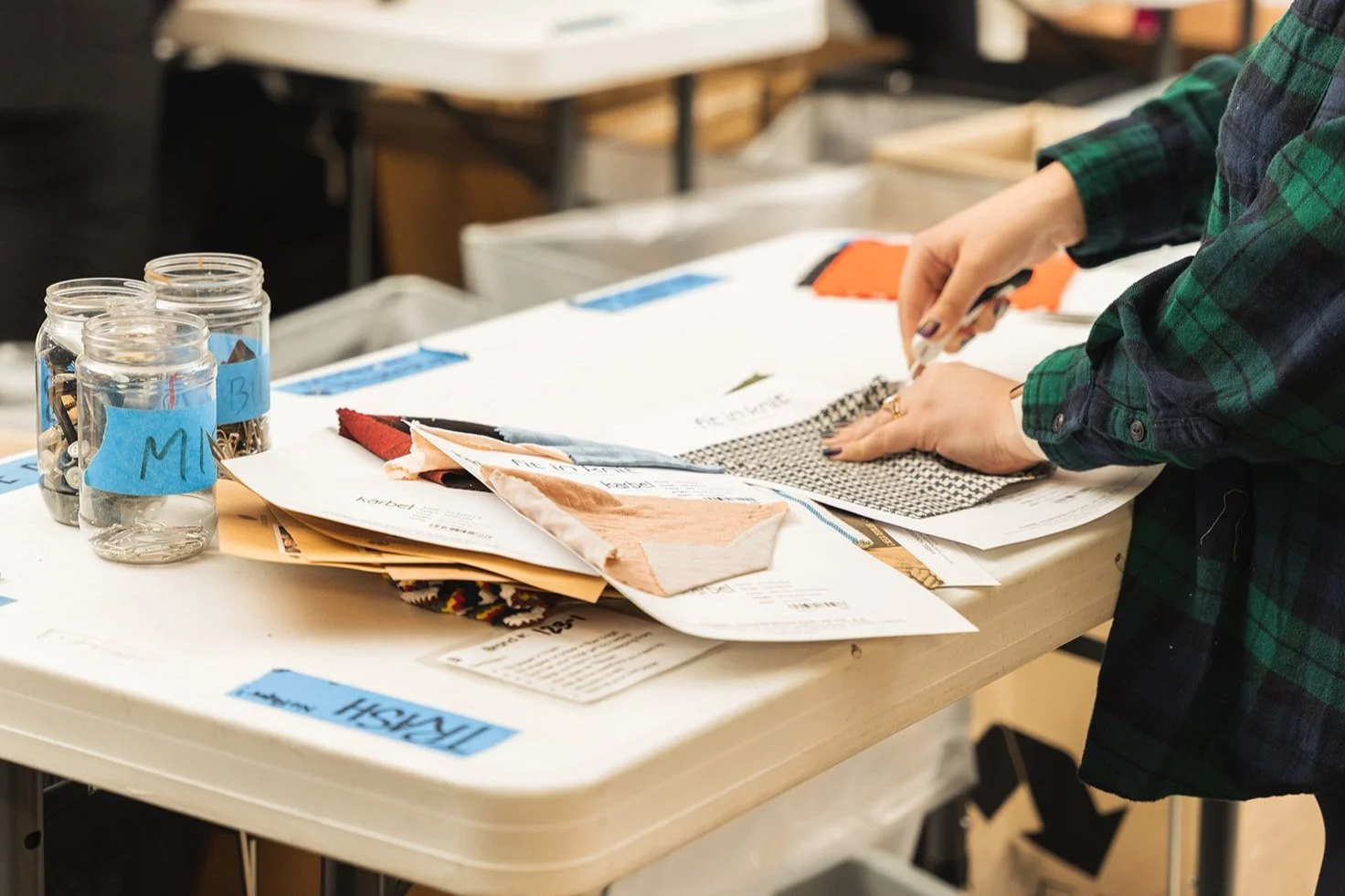
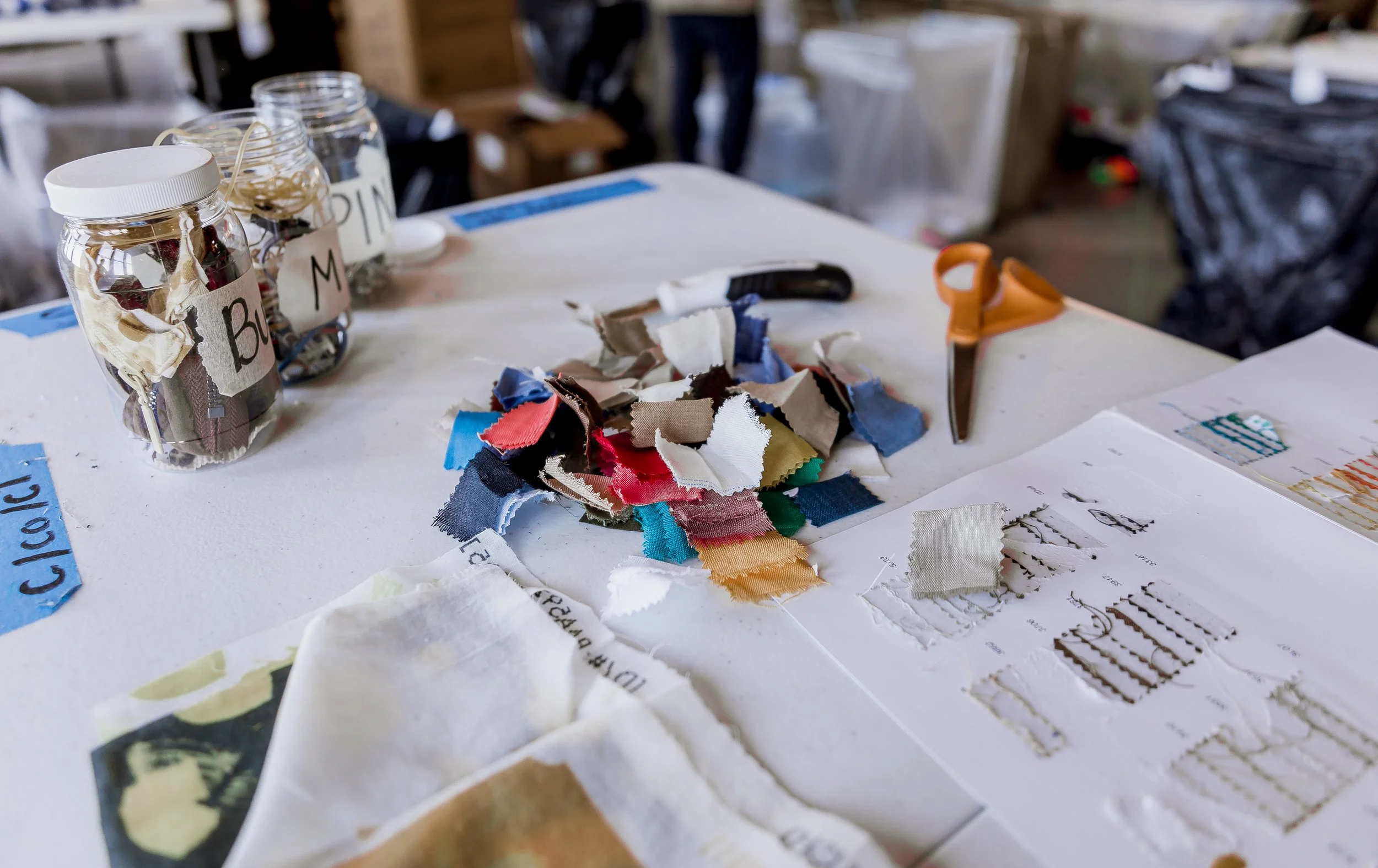
Fabric headers, samples of fabric designed as marketing tools for material selection, comprise a significant portion of the pre-consumer textile waste stream. Produced and discarded in enormous quantities, fabric headers comprise an estimated 75% of the pre-consumer textile waste received by FABSCRAP. Their mixed-material construction—combining textiles, adhesives, staples, and other fasteners— renders them difficult to disassemble and recycle.
With clear data, a practical assessment tool, and growing momentum for change, the path forward is evident: redesign fabric headers, reduce pre-consumer textile waste, and create a more circular and efficient future for the fashion and textile industry.
SMARTER SWATCHES: A GUIDE TO REDUCING TEXTILE SAMPLING WASTE
While investment in recycling infrastructure remains essential for long-term sustainability, waiting for those advancements to materialize does little to address the immediate issue of waste generation. The most practical and immediate intervention lies upstream—redesigning fabric headers to reduce waste, costs, and inefficiencies at the source.
Simplifying the composition of headers to include a limited number of low-impact components holds the potential to significantly reduce the environmental footprint of fabric sampling.
Brands, textile mills, and product developers must collaborate to establish clear guidelines for sustainable header design.
This guide offers suggestions for brands to take proactive steps in evaluating fabric header usage, developing low-impact solutions, and participating in collective efforts to standardize smarter fabric sampling.
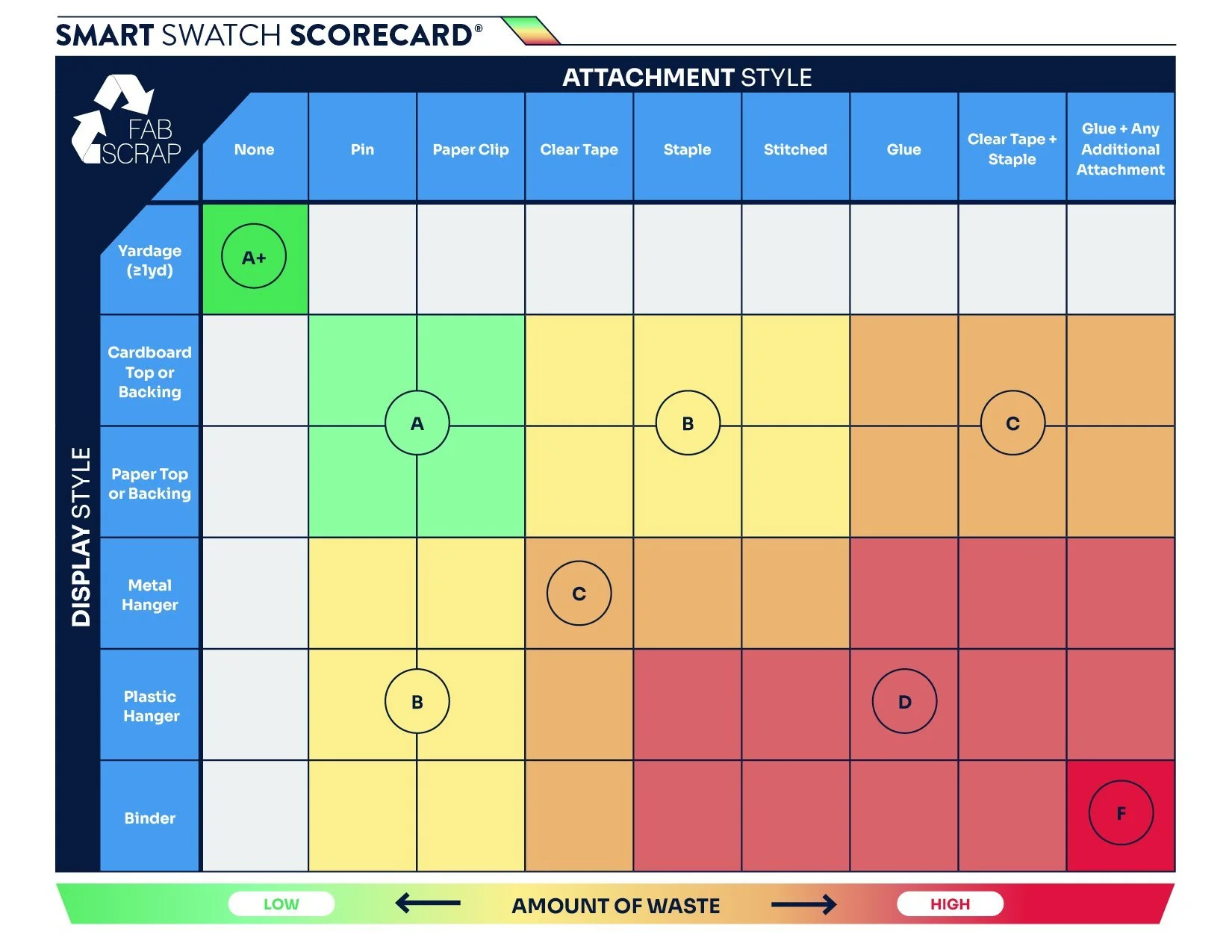
SMART SWATCH SCORECARD
We are proud to introduce the Smart Swatch Scorecard, offering a groundbreaking tool for evaluating the environmental impact of different header types. This scorecard enables brands, textile mills, and industry stakeholders to assess their current fabric header selection based on material composition, attachment style, and end-of-life solutions.
By quantifying the impact of different header types, this tool provides a clear framework for companies to transition toward lower-impact alternatives and eliminate unnecessary waste at the source.
-
The full report “The Sample Overhaul and Audit Project: An Assessment of Textile Sampling Waste”, which includes detailed methods and analysis informing these conclusions can be accessed here.
-
This report was made possible through the New York State Pollution Prevention Institute’s (NYSP2I) Community Grants Program. NYSP2I gives New York State businesses, communities, and nonprofits the practical tools and solutions they need to realize the benefits of sustainability for our economy, environment, and society. Learn more at www.rit.edu/affiliate/nysp2i
As with everything at FABSCRAP, this project came to fruition at the hands of our dedicated community. Sorting over 41,000 headers required the help of hundreds of volunteers - thank you to everyone who generously donated time towards this accomplishment. Thank you to the creative and dedicated team of FABSCRAP employees and interns who took on this additional project with diligence, care, and ingenuity - organizing, processing, and tracking nearly 8,000 pounds of material. Finally, thank you to the 881 brands who partner with FABSCRAP to push the industry towards more sustainable practices - you are all indispensable in the creation and implementation of this report.
Report Design and Layout: Rainer Jurgens, Syllo.
-
Gabriel, M.B., Flanagan, M., Corvus, J., Monteagudo, C., & Schreiber, J. (2025). Smarter Swatches: A Guide to Reducing Textile Sampling Waste. FABSCRAP and IENYC.
Copyright 2025 FABSCRAP, INC. All rights reserved. Reproduction is strictly prohibited without prior written permission from the authors. Every effort has been made to trace the copyright holders for this publication.


Make your inbox a little more FAB
Stay in the know - receive upcoming event information, our quarterly email newsletter and special announcements.